The operational reality of moving cargo across Eurasia For many international supply chains, expansion into Central Asia or the Caucasus exposes structural gaps between global planning and regional execution.
The operational reality of moving cargo across Eurasia
For many international supply chains, expansion into Central Asia or the Caucasus exposes structural gaps between global planning and regional execution.
In theory, the Middle Corridor offers significant advantages in transit time and geopolitical resilience. In practice, execution requires precise coordination across multiple jurisdictions and infrastructure systems.
Typical challenges include:
• insufficient network coverage across CIS, Caucasus, and Middle Corridor routes
• border and customs disruptions caused by documentation or transit guarantee issues
• limited local presence behind a regional “sales office + subcontractor” model
• slow response when operational issues occur along complex multimodal corridors
For supply chains moving between Europe, Central Asia and China, these risks translate directly into unpredictable transit times and operational uncertainty.
Azurite’s model was built to address exactly these challenges. Founded in Kazakhstan and developed around the Middle Corridor, the company operates its own network of offices and operational capabilities across Europe, Türkiye, the Caspian region and Central Asia.
This hybrid structure allows Azurite to provide:
• corridor-specific expertise across CIS and Caspian operations
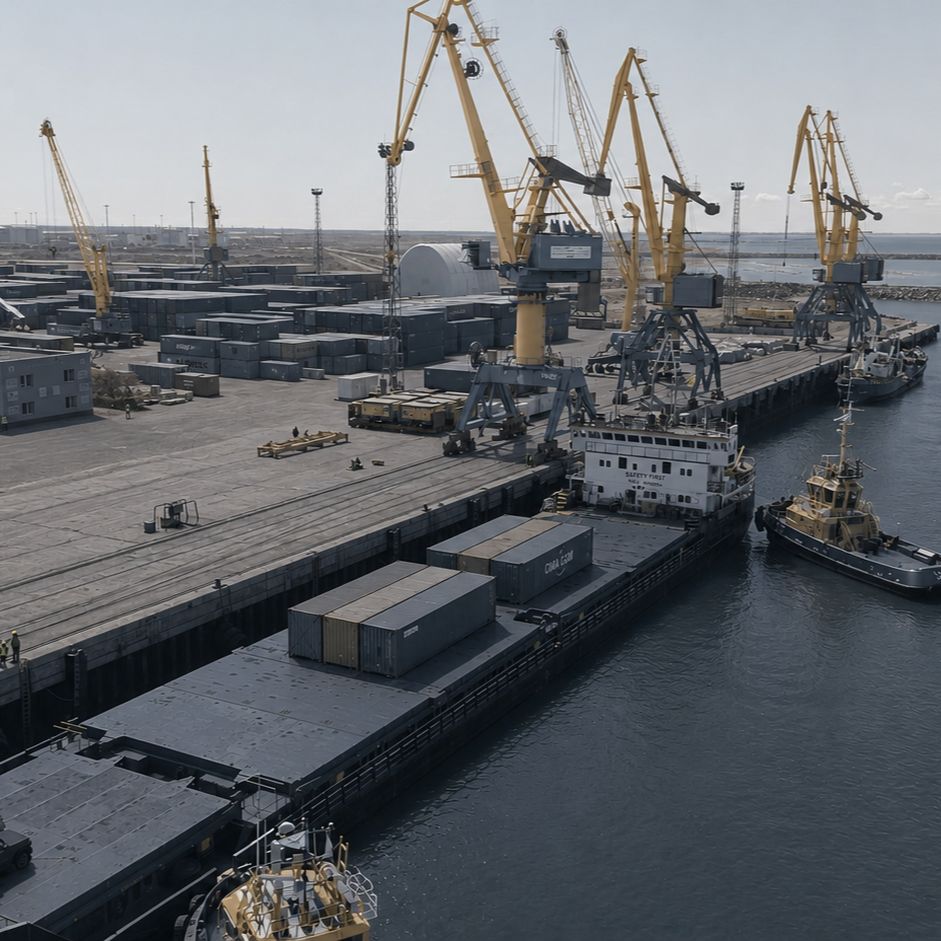
• real operational presence at key transit gateways such as Aktau and Baku
• multimodal flexibility across rail, road and Caspian crossings
• dedicated contacts for commercial, operational and escalation support
For companies transporting cargo between Europe, Central Asia and China, the difference is straightforward. A corridor like the Middle Corridor cannot be managed remotely, it must be operated from within.