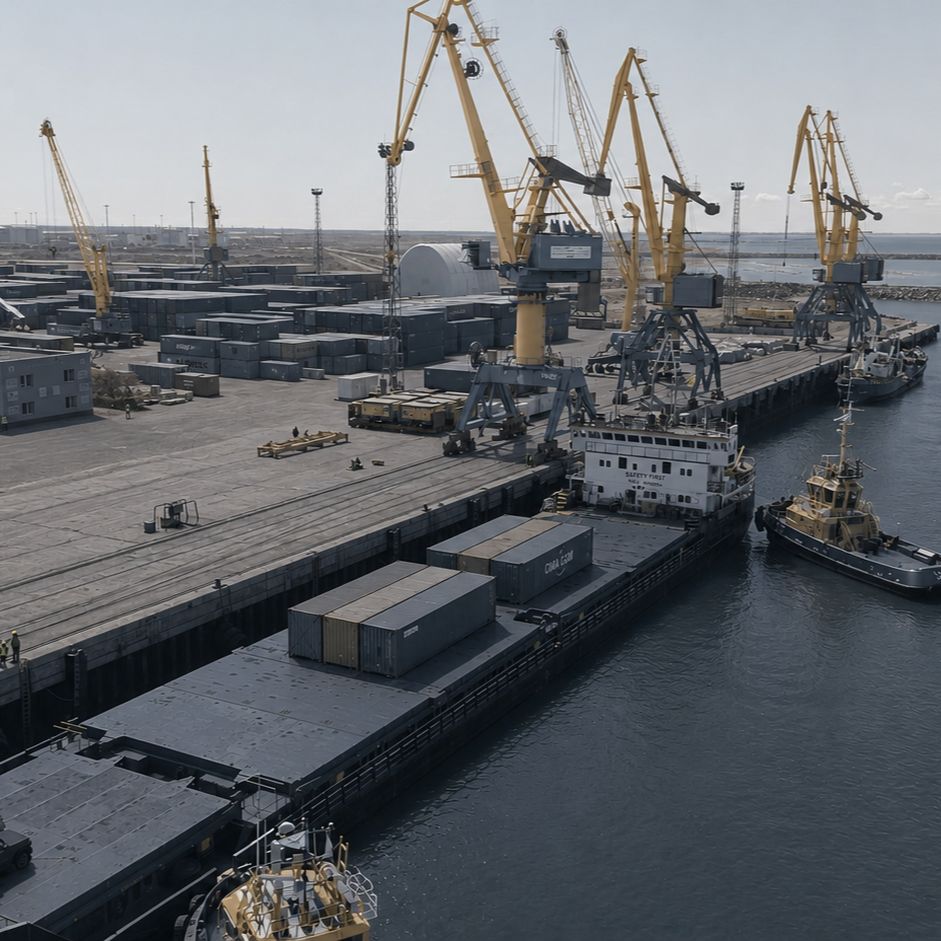
The expanding role of the Trans-Caspian route The Trans-Caspian International Transport Route has grown significantly over the past decade, with annual freight volumes increasing from less than 1 million tons to more than 4.5 million tons.
The expanding role of the Trans-Caspian route
The Trans-Caspian International Transport Route has grown significantly over the past decade, with annual freight volumes increasing from less than 1 million tons to more than 4.5 million tons.
Container transport is expected to follow the same trajectory. Approximately 77,000 TEU moved along the corridor in 2025, while forecasts suggest that volumes could reach 300,000 TEU within the next few years.
This rapid growth is supported by ongoing investments in:
• rail infrastructure across Kazakhstan
• port capacity in Aktau and Kuryk
• container hubs and logistics terminals along the corridor
• coordinated development strategies between Kazakhstan, Azerbaijan, and Georgia
For logistics operators, the Caspian crossing remains one of the most critical elements of this corridor. With operational teams located in Aktau and Baku, Azurite works directly at both key maritime gateways of the Middle Corridor. This presence allows the company to coordinate cargo flows across the Caspian and maintain operational continuity between rail, maritime, and road transport segments.
As infrastructure investments continue across Kazakhstan, Azerbaijan, and Georgia, the Middle Corridor is steadily strengthening its role in global Eurasian trade. For logistics providers operating within the region, the focus now shifts from building the corridor to scaling its operational reliability.
Sources in comments