Türkiye consolidates its role as the Western anchor of the Middle Corridor in 2026.
Türkiye consolidates its role as the Western anchor of the Middle Corridor in 2026.
Türkiye’s 2026 public investment program signals a structural shift: railways are now the dominant pillar of national transport strategy, supported by synchronized upgrades in ports, highways, aviation, and digital infrastructure.
More than ₺508 billion has been allocated to transport and communications in 2026, with rail receiving the largest share. This is corridor architecture at scale.
Railway expansion targets include:
- 2,769 km of high-speed rail
- 14,437 km total rail network length
- ₺261.58 billion allocated to rail investments
- 91 railway projects underway
- Six major priority rail corridors, including Halkalı–Çerkezköy and Kars–Iğdır–Dilucu
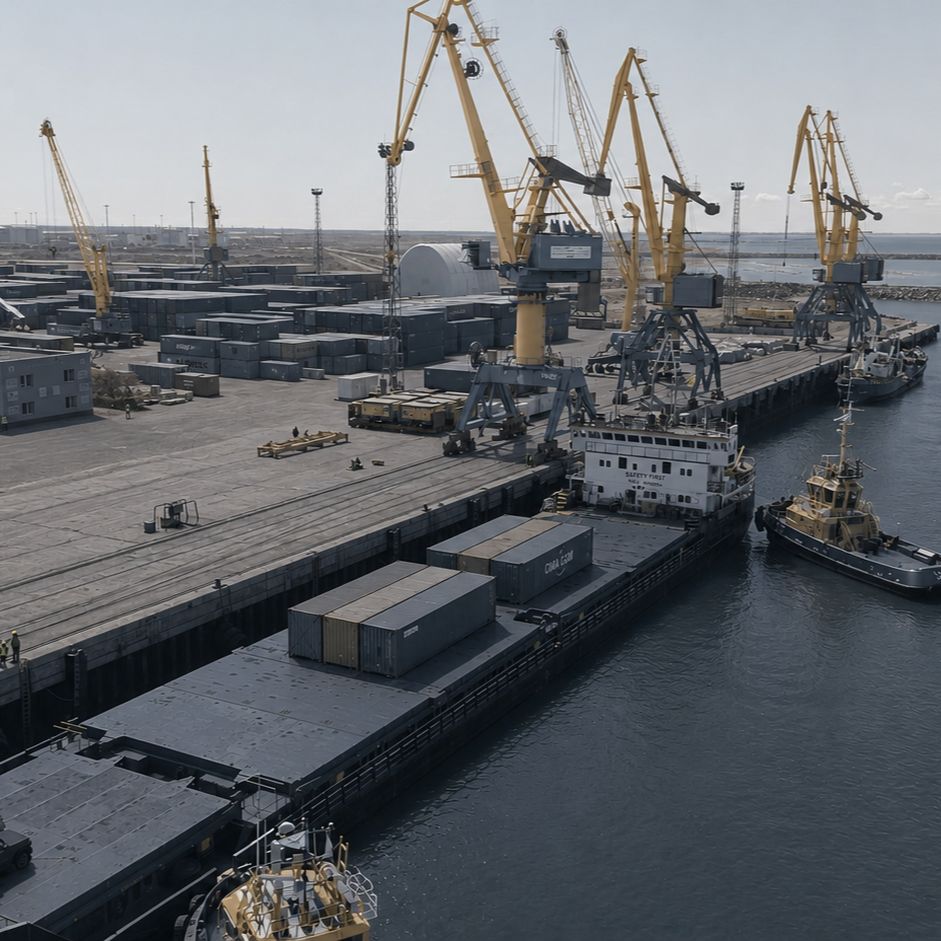
At the same time, maritime capacity is expanding, with container handling targeted at 15.1 million TEU and additional rail connections to ports increasing corridor fluidity. Digital inclusion programs and domestic R&D initiatives reinforce operational resilience beyond physical infrastructure.
For Europe–CIS–China trade lanes, the implications are structural.
Türkiye is not merely a transit country - it is the operational gateway between EU production hubs and Caspian crossings. As rail density, electrification, and port-rail synchronization improve, the western segment of the Middle Corridor becomes less exposed to congestion volatility and modal fragmentation. For cargo owners navigating the complexities highlighted in Eurasian transit flows: border variability, customs coordination, and multimodal transfer friction. Such infrastructural depth directly translates into risk mitigation.
Azurite’s presence in Istanbul positions the company at this exact inflection point. With an operational office in Turkey, Azurite integrates rail interfaces into Europe via Halkalı and Thrace, Caspian-bound flows through Baku and Aktau, and multimodal routing across the full Middle Corridor.
National infrastructure expansion combined with corridor-level execution reduces exposure to three persistent bottlenecks identified across Eurasian transit routes: border-related variability, multimodal transfer friction and customs coordination gaps. Azurite’s Istanbul office acts as a controlled interface between EU-origin cargo and Caspian transit flows — aligning rail slots, port windows, customs processes, and onward routing toward Central Asia.
In 2026, competitiveness on the Middle Corridor will not depend on theoretical transit times, but on how effectively infrastructure, assets, and coordination are unified into one controlled transit system.
Sources in comments