How Azurite solves Caspian bottleneck capacity equation.
How Azurite solves Caspian bottleneck capacity equation.
Even when terminals perform, documentation is correct, and authorities operate as intended, queues still form. That is not inefficiency, it is what happens when vessel supply is structurally smaller than demand.
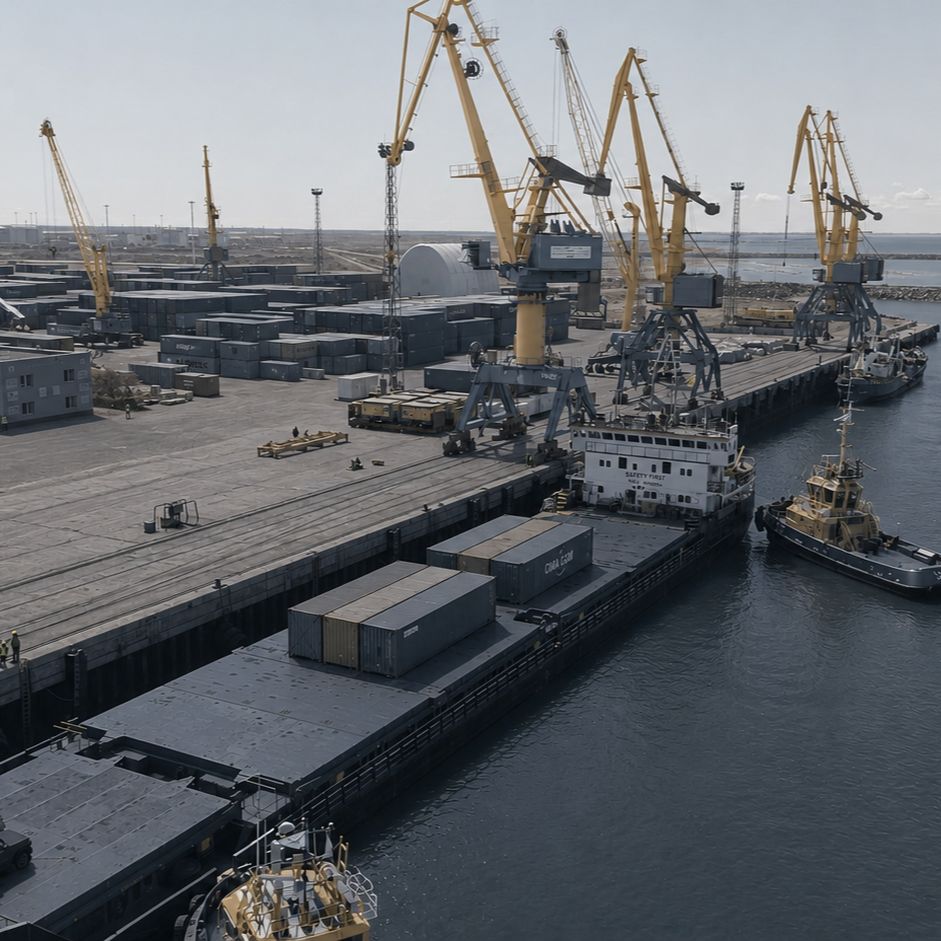
Container-capable ships on the Caspian are limited in number, state participation remains high, and fleet renewal cycles are long. When cargo demand rises faster than vessel supply, queues form - even when ports, terminals, and authorities operate correctly.
This creates a predictable pattern:
- Cargo readiness outpaces sailing windows
- Vessels operate at full utilization
- Waiting time becomes systemic, not exceptional
At Azurite, this reality is addressed through direct local presence. With an operational office at the Caspian gateway, teams work on the ground to coordinate sequencing, documentation, and handovers, reducing friction where control is possible, even when capacity is finite. Effective logistics management begins when blame is replaced with structural plans aligning cargo readiness, vessel availability, and decision timing with reality.
By maintaining operational presence at the crossing, Azurite works inside the constraint - coordinating documentation, and communication to reduce avoidable friction.